You Won’t Believe These Hidden Corners of Santiago de Cuba
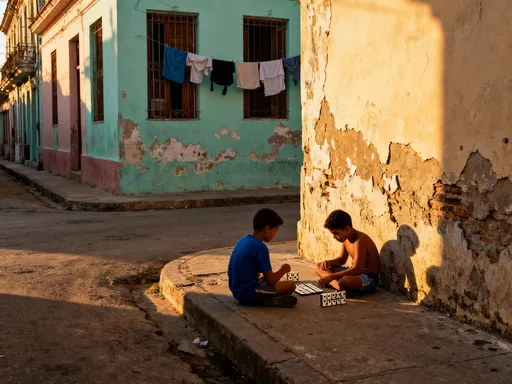
Santiago de Cuba isn’t just about rum and revolution—its soul lives in the quiet corners between the postcard spots. I wandered far beyond the guidebooks and found neighborhoods pulsing with music, history, and raw authenticity. From pastel-painted alleys to local domino games on street corners, this city breathes differently. If you're chasing real moments, not tourist traps, Santiago’s hidden blocks will steal your heart. Let me show you why.
The Pulse of Santiago: Why This City Feels Different
Santiago de Cuba occupies a singular place in the cultural heart of the island, distinct from Havana in both rhythm and resonance. While the capital dazzles with restored colonial elegance and curated performances, Santiago offers something less polished but infinitely more alive—a city where history isn’t preserved behind glass but lived in the cadence of daily routines. Nestled at the foot of the Sierra Maestra mountains and cradled by the deep blue Bay of Santiago, its geographic isolation has long shaped its identity, allowing traditions to evolve independently from the rest of the country. This seclusion has preserved Afro-Cuban customs, music forms, and architectural styles that feel untouched by time or tourism.
What truly sets Santiago apart is its emotional texture. The city carries the weight of pivotal moments—the spark of revolutionary uprisings, the birthplace of son music, the enduring influence of Caribbean migration from Haiti and Jamaica. These layers aren’t footnotes in a museum exhibit; they are present in the way elders speak, in the call-and-response of street-corner chants, and in the colors painted on crumbling walls. Unlike Havana, where tourism infrastructure often creates a buffer between visitors and residents, Santiago remains porous. You don’t just observe life here—you walk into it, often uninvited but always welcomed.
Exploring Santiago’s barrios—the intimate neighborhoods that stitch the city together—offers a rare window into authentic Cuban life. These districts were not designed for outsiders, yet they open their doors through shared glances, spontaneous conversations, and the universal language of music. To walk through them is to witness resilience, creativity, and community in their most natural form. For travelers seeking more than photo opportunities, these streets offer a deeper kind of discovery: one rooted in human connection and cultural continuity.
Barrio Vista Alegre: Where Music Lives in Every Window
One of Santiago’s most vibrant yet under-visited neighborhoods, Barrio Vista Alegre, hums with an energy that feels both effortless and electric. Rows of pastel-colored homes, some chipped with age and others freshly painted in coral, mint, and sunflower yellow, line narrow streets where laundry flutters like flags between buildings. But it’s the sound that defines this place—the steady pulse of congas, the bright strum of a tres guitar, the laughter that follows a perfectly timed clave rhythm. Music here isn’t performed for tourists; it spills from open windows, drifts through shared courtyards, and rises from porches where families gather in the evening.
In one corner of the barrio, beneath a tarp strung between two houses, a group of musicians rehearses a traditional son conjunto. The lead singer, a man in his sixties with a weathered face and a broad smile, invites a visiting child to shake a maraca, laughing as the boy stumbles through the beat. This is how music is passed down—not in formal lessons, but through participation, imitation, and joy. The architecture of the neighborhood supports this culture: many homes are built as solares, former tenement houses with central courtyards that open to the sky, creating natural gathering spaces where sound travels freely and community forms organically.
For visitors, the key to experiencing Vista Alegre respectfully lies in timing and presence. Early evenings, just after sunset, are ideal—when families are outside, the heat has softened, and music begins to rise naturally. A quiet demeanor, a warm smile, and a willingness to listen go much further than cameras or questions. If you bring a small offering—a shared soda, a compliment about the music—it may open a conversation. But the real gift is simply being there, absorbing the rhythm without trying to control it. This is not a show; it’s a way of life.
San Juan Hill: History That Still Echoes Through the Streets
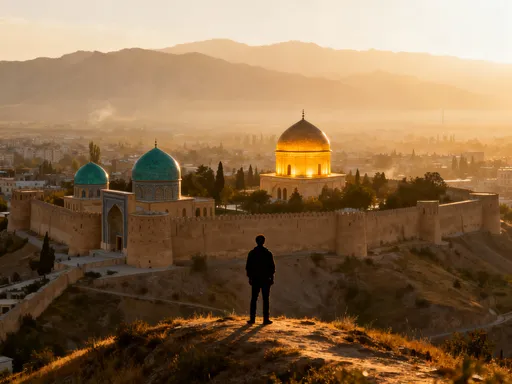
Perched on a steep slope overlooking the city and the shimmering bay below, San Juan Hill—Cerro de San Juan—is more than a viewpoint; it’s a monument to resistance and memory. In 1898, this strategic high ground was the site of a fierce battle during the Spanish-American War, where Cuban and American forces fought to dislodge Spanish troops. Decades later, in 1956, it became a symbol of revolutionary determination when Fidel Castro and his fighters launched a failed attack on the Moncada Barracks nearby. Though the assault failed, it marked the beginning of a movement that would reshape the nation, and San Juan Hill remains a place where history feels tangible.
Walking the winding streets of this barrio today, one notices the quiet pride of its residents. Murals adorn the sides of homes and stairwells—images of Che Guevara, Camilo Cienfuegos, and local heroes painted in bold colors that contrast with the weathered walls. A small museum near the summit commemorates the 1959 revolution, displaying faded photographs, rifles, and personal letters. But the real story isn’t confined within walls; it’s in the way elders speak of “the struggle,” in the reverence with which they mention July 26—the date of the Moncada attack—still celebrated each year with marches and music.
The climb to the top rewards with panoramic views: the turquoise bay, the distant peaks of the Sierra Maestra, and the sprawling rooftops of Santiago below. But the emotional view is just as powerful. This is a place where sacrifice is remembered not as distant history but as living legacy. Children play near plaques marking bullet holes, and families picnic near monuments, treating them as part of the neighborhood rather than relics. For travelers, visiting San Juan Hill is not about glorifying conflict—it’s about understanding the depth of national identity forged in moments of courage and loss.
La Alegría: A Glimpse Into Everyday Cuban Life
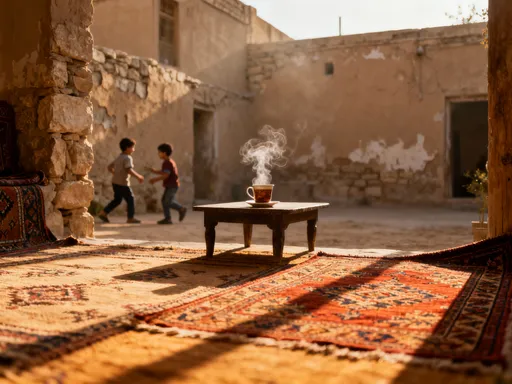
Far from the tourist circuits, La Alegría offers a rare glimpse into the unfiltered reality of Cuban daily life. The name—meaning “joy”—might seem ironic at first glance: the streets are uneven, many homes show signs of wear, and resources are visibly scarce. Yet, the spirit here is undeniably warm and resilient. Clothes hang from balconies, children chase a deflated ball through the alleyways, and neighbors sit on stoops sharing coffee from a single thermos. There are no souvenir stalls, no guided tours, no English-language menus—just life, unfolding at its own pace.
What makes La Alegría so compelling is its authenticity. Without the influence of mass tourism, the neighborhood remains untouched by performance or pretense. People go about their routines with a quiet dignity—women ironing clothes by open windows, men repairing bicycles with limited tools, grandmothers calling out to grandchildren across the street. A local bodega opens for a few hours each day, its shelves sparsely stocked with sugar, soap, and canned goods. Yet, there is no sense of despair—only adaptation, resourcefulness, and a deep sense of community.
For travelers, visiting La Alegría is an exercise in humility and observation. It’s not a place to take hundreds of photos or demand interactions. Instead, it invites presence: a nod of recognition, a simple “buenos días,” a moment of shared silence on a bench. When connections do form, they are genuine—like the woman who offered a visitor a slice of mango from her kitchen, or the teenager who practiced English while fixing a radio. These small exchanges, built on mutual respect, often leave the most lasting impressions. La Alegría doesn’t sell an experience; it shares a life.
El Caney: Between Tradition and Transformation
Located on the eastern edge of Santiago, El Caney is a neighborhood in quiet transition. Once primarily residential and agricultural, it now balances tradition with subtle signs of change. Modest homes with red-tiled roofs stand beside newer constructions, and family-run paladares—private restaurants—have begun to appear, serving dishes like ropa vieja and congri to locals and the occasional visitor. Unlike larger cities where tourism drives rapid development, El Caney evolves slowly, shaped more by necessity than outside demand.
One such paladar, run by a couple in their fifties, operates out of their living room. The tables are simple, the menu handwritten, but the food is rich with flavor and history—recipes passed down from grandparents who farmed the surrounding land. Nearby, a young artist converts a back room into a workshop, painting vibrant scenes of Santiago’s streets and selling them to neighbors and curious passersby. These small enterprises are not commercial ventures in the global sense; they are acts of resilience, ways to generate income while preserving dignity and creativity.
The younger generation in El Caney navigates a complex path—honoring their roots while seeking new opportunities. Some learn English through online videos, others dream of traveling abroad, yet many express a deep attachment to their community. They respect the elders’ stories, participate in local music groups, and value the slower rhythm of life. For travelers, supporting these micro-businesses—by dining at a paladar, buying a painting, or simply sharing a conversation—can make a meaningful difference. But the key is to engage without disrupting, to contribute without assuming ownership of the culture.
Getting Around: Navigating Santiago’s Neighborhoods Like a Local
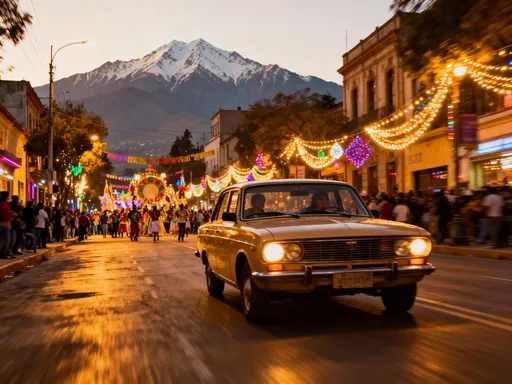
Exploring Santiago’s barrios requires a blend of preparation and intuition. Public transportation in the city is limited but functional, with colectivos—shared taxis—serving as the most practical option for reaching outlying neighborhoods. These are often vintage American cars from the 1950s, repainted and retrofitted, that follow loose routes through the city. To board one, simply stand near a major intersection and signal; the driver will call out the destination as they pass. Fares are modest, paid in Cuban pesos, and seating is communal—expect to share space with locals heading to work or market.
Walking is the best way to truly experience the city, but it demands awareness. Santiago is hilly, and the tropical sun can be intense, so early mornings or late afternoons are ideal times to explore. Wear comfortable shoes, carry water, and dress modestly to blend in. In residential areas, avoid loud conversations or intrusive photography—many locals appreciate visitors but value their privacy. A simple greeting in Spanish—“buenos días” or “hola”—opens doors more than any guidebook.
Understanding social cues is equally important. In some barrios, children may approach with curiosity; a friendly smile is welcome, but prolonged attention may make families uncomfortable. If music is playing, it’s polite to wait and observe before approaching—joining should feel invited, not imposed. Learning a few basic phrases—“¿Puedo pasar?” (May I come in?), “Gracias por su hospitalidad” (Thank you for your hospitality)—shows respect and fosters connection. The goal is not to be a silent observer, but a mindful participant.
Why Offbeat Exploration Matters: Travel That Honors the Real Cuba
Choosing to explore Santiago’s lesser-known neighborhoods is more than a travel decision—it’s an ethical one. Mainstream tourism often concentrates in select areas, creating economic bubbles that bypass the majority of residents. By venturing into barrios like Vista Alegre, La Alegría, and El Caney, travelers redirect their presence and resources to communities that rarely benefit from tourism. A meal at a family paladar, a donation to a local music group, or even the purchase of hand-painted postcards directly supports livelihoods in meaningful ways.
But the impact goes beyond economics. When travelers engage with real life—listening to stories, sharing moments, respecting boundaries—they participate in authentic cultural exchange. This kind of travel dismantles stereotypes, replacing distant assumptions with human connection. It allows Cubans to be seen not as caricatures of resilience or poverty, but as individuals with dreams, humor, and wisdom. For the visitor, the reward is depth: a memory not of a perfect photo, but of a shared laugh, a spontaneous song, a moment of mutual recognition.
Mindful travel also challenges the checklist mentality—where destinations are conquered rather than experienced. In Santiago, the most powerful moments are often unplanned: a conversation with an elder on a bench, the smell of garlic frying in a back kitchen, the sound of children singing in unison down a narrow alley. These are not attractions; they are invitations. To accept them is to travel with humility, curiosity, and heart.
Santiago de Cuba’s magic isn’t locked in museums or monuments—it spills from laundry lines, echoes in street drums, and lives in the slow pace of its side streets. By stepping into its overlooked neighborhoods, travelers don’t just see Cuba—they feel it. This is travel at its most meaningful: intimate, real, and unforgettable.